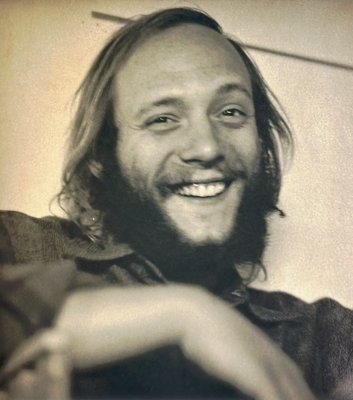
Clifford Harrison

1949 - 2026

In Remembrance

Cliff remembered: What I said at his memorial-

I’ve known Cliff longer than anyone in this room.

We met in third grade in Lexington, in 1956. We weren’t close right away because he was more athletic and social than I was, but in junior high school we both got involved in a Jewish youth group and became fast friends. We explored our faith, as well as our fascination with girls, and the emerging hippie and folk counterculture in Cambridge, in its many manifestations.

He used to spend quite a lot of time at my house even though my mother thought he was a bad influence. Indeed, he came back from boarding school when we were both 16 and introduced me to marijuana, a habit we shared for most of our lives.

After I moved to Santa Barbara in 1968, he came to visit me and my girlfriend, and lived with us for a time, but then he got involved in Isla Vista, the community next to the university—settling there, eventually much longer than I did. When I married in 1970 he was my best man—and he was my best man for life. Over the years of our lifelong friendship he meditated many of the struggles between me and my many relationships.

Although we never shared his eventual commitment to The Friends, our friendship transcended that. It was forged early, in a deep love and affection, and grew over a lifetime of common experiences and deliberate mutual commitment.

We had silly nicknames for each other— He was Cliffy-Wiffey and I was Alley-Walley or sometimes, just Sav.

I don’t remember when he stopped wearing shoes, but I can tell you, when he was young and fit, he played aggressive tennis barefoot on asphalt courts, and he often beat me.

Shoeless, he left a large footprint.

I admired his courage to speak his mind and his ability to speak and write articulately, poetically and forcefully about his feelings and convictions. Later in our lives I was pleased to host one of his poetry readings at my home. His videos on YouTube are from that event. He was a gifted writer.

He could be eloquent and annoying, opinionated and funny all at the same time.

In the early 1970’s he founded The Town Crier, a weekly newspaper in Isla Vista and I joined this effort as his partner. It closed eventually for various reasons but Cliff, both before and after, was a controversial local politician, then a restaurant impresario there, with a pizza parlor and a popular coffee house for some years after I returned to Boston.

He was far from perfect those days. He put much of his profits up his nose, he told me, lost his businesses, and treated many women badly. When he was 37 he chose celibacy because, he said, “I don’t want to hurt any more women.”

When he eventually moved back East, The Quaker Community here changed him forever. I think it challenged his sense of integrity and purpose.

We renewed our friendship with regular get togethers, often dinner, a joint, and a science fiction movie. Otherwise, our lives could not have been more different—His quest was for truth and a simple life, and mine was for comfort and adventure, but we remained devoted to our love for each other.

I was sad when he moved to Kansas but understood him wanting to be near family. I resolved to visit and got to do so a few times, one of which included a road trip from Wichita to Denver, during which we relived many of our crazy times together over our long and circuitous lives.

I will miss him mightily. My best friend, a lifelong friend, a more deeply intelligent, sincere, and stubborn person who knew me better than anyone, and can never be replaced in my life. I still cannot imagine a world without him in it. He made my life richer and deeper and he will be missed.

It’s coincident that we celebrate him today. In 1989, on this date, he read his poetry to a Meeting in this room. He was born in May, I knew, but he would never tell me the exact date, so I arbitrarily picked this date, years ago, May 16, to celebrate his birthday with him. So happy 77th birthday, Cliff, my true friend.

— ALAN SAVENOR
My name is Hsin-yi Lu, and I served as a faculty member at The Meeting School from 2001 to 2003. Stepping into an alternative Quaker school in northern New England was a dramatic change for someone born and raised in Taiwan, and educated entirely within mainstream system. It was Cliff who inspired me to make this radical move, and the journey became truly transformative because of his guidance and wisdom--his ability to see straight into the true soul of everyone, his willingness to listen attentively and catch the light in whatever was spoken, and his deep compassion and understanding for teenagers with learning, intellectual, and emotional diversities. All of these remain some of the most cherished memories of my time in the United States.

After leaving TMS, I was fortunate to visit Cliff several times in Malden, where our conversations continued to anchor and inspire me. In 2006, when I faced a challenging chapter in my life, Cliff helped me through the difficult transition of journeying back home. After the pandemic, reconnecting with Cliff and dear friends in New England became my highest travel priority, and I feel immensely blessed that we had the chance to catch up in Boston three years ago.

Cliff, you will be deeply and long missed from across the ocean here in Taiwan.

— Hsin-yi Lu

Cliff and I had only just begun our friendship after having met at Oread FM and after we had begun to go together to our small Wednesday evening Gaza vigil. I was filled with gladness and excitement for having finally met a friend for whom I have long hoped. I have already missed him longer than the time knowing him. Even so, grateful for it.

— Randy Hershey

My name is Ronald BosLun, and I served as faculty at The Meeting School from 1999-2003 and then again from 2007-2008. I met Cliff Harrison in the spring of 1999 when Michelle and I drove to Rindge, New Hampshire to meet people at TMS, which Cliff was in the process of saving and rejuvenating. I was impressed with his intelligence, his forthrightness, and his confidence in both senses of the word. Given his gifts, he did not lack what we typically label confidence, yet he retained a humility, especially about his own opinions. I was instantly and forever enthralled. I also appreciated how quickly he confided in us about the direction of the school and his many hopes and dreams for all in the TMS community and beyond.

Cliff quickly became a mentor of mine, most notably about how to deal with young people, but also about parenting, marriage, and more. He took our older son under his wing when Aaron seemed to me an unreasonable teenager; Cliff saw the Light in our son and helped him find his voice and his true Self. Cliff continued as my mentor well after his departure from TMS, and I recall meeting with him in Malden or Boston quite a few times in the past twenty years, though we had far less contact after he moved to Kansas.

Things that I learned and remember from Cliff: It is possible for two truths that do not appear compatible to occupy the same space. We must listen deeply. When we thresh or worship or discern, we must avoid trying to win arguments - rather that we should seek the will of God. Even when we have treated a young person with respect a thousand times, that youth will never forget the one time that we yelled in anger or were unreasonable. Cliff was a rare soul, and I will remember him as long as my memory lasts.

— Ronald S.L. BosLun

A fond farewell to Cliff but never to memories of him. I spent some years on peace and social concerns committee with Cliff in the back parlor at FMC in the 80s-90s. We all took a deep breath as Cliff folded his hands in front of him and said: “I am sorry to have to bring this up..” and then launched onto a lengthy and slow critique of the general flow of the discernment up to that point. His opinions were always deeply held, often wise, sometimes simply cantankerous. Made us all think. He also had a sweet smile.

— Em McManamy (I used to go by Martha, my dead name)

ah, cliff, what a pain, what a gift.

he had a john woolman-esqe aura about him, living a life expressing many deep quaker and christian values. his pugnaciousness might impede (or enhance) a committee or discernment process. as when FMC crafted its first statement about Palestine-Israel in 2014. he constantly insisted, hands folded across his belly, we should add phrases like "Quakers don't take sides."

people often called him "skip "and me "cliff," which i took as an honor. we didn't resemble each other physically. his explanation: "we are both viewed as respected oddballs." (for me, i'm not sure about the "respected.")

— skip schiel

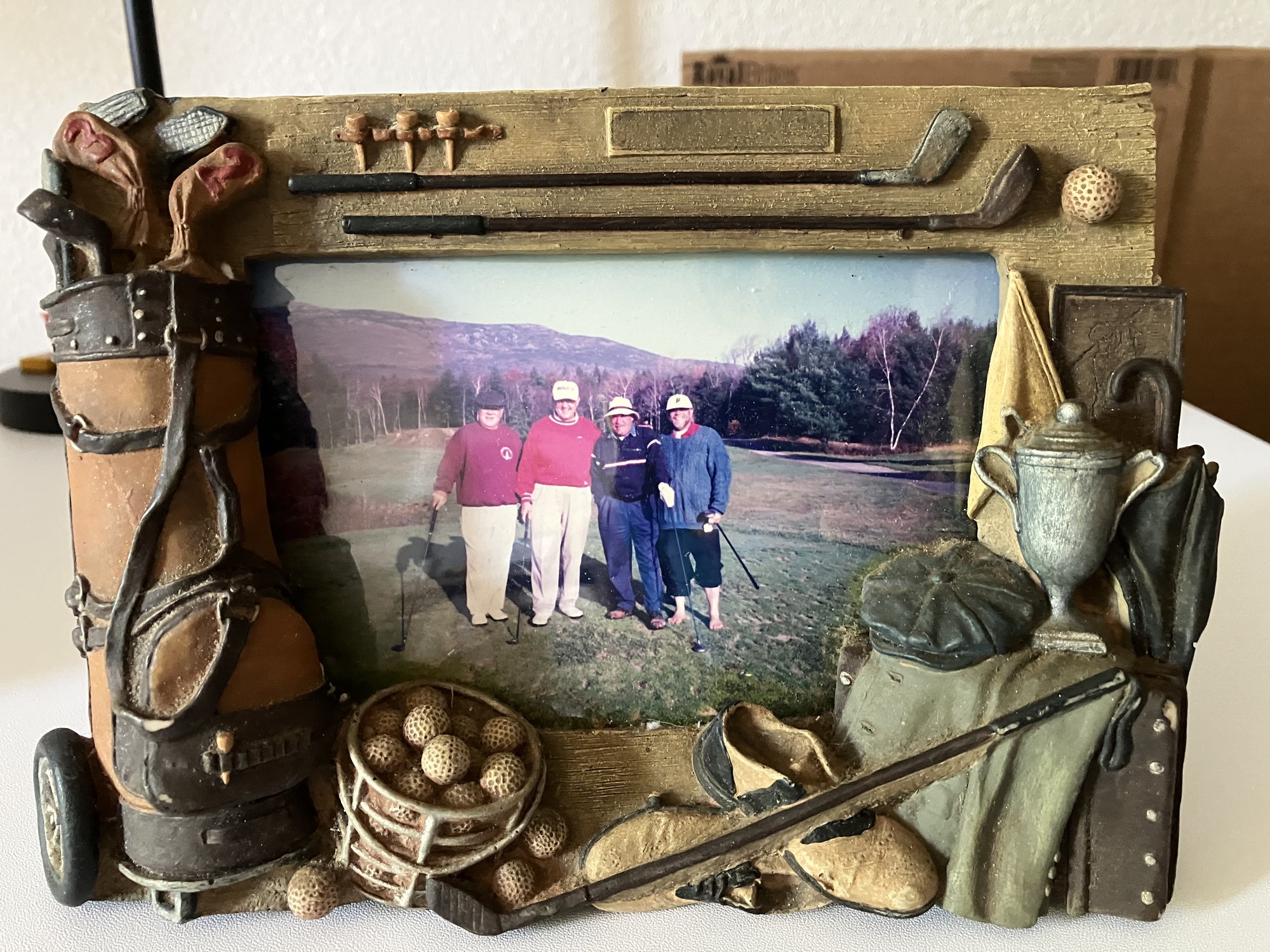
This was the only framed photo in Cliff's living room.

— John Harrison

Cliff was a true friend while my years in metro Boston. A passionate activist based on spiritual enlightenment and conscious living. A person of Faith, lived his Ministry and literally pulled me out of despair from the turbulence we find ourselves. You saved my life, and helped many others as well. Your insight and teaching by doing will be a guide as we carry on to make our place in the world livable. Good-bye for now, may we meet again in the sun on Mount Hood.

— Vincent Kosik

Cliff Harrison A Life Lived in Relentless Search of Truth

A Life of Spiritual Intensity, Courageous Engagement, and Relentless Peacemaking Cliff Harrison lived his life as someone who believed that faith was not an idea — it was an active force. He was a devoted member of the Religious Society of Friends (Quakers) and a powerful presence within New England Yearly Meeting for decades.

But Cliff was not interested in influence for its own sake. He was interested in truth — especially truth that required courage.


A Voice for Authentic Spiritual Depth Cliff believed that spiritual life required rigor. He was deeply rooted in core Quaker convictions: • That individuals need no intermediary to experience God. • That revelation is continuing. • That equality, simplicity, and truth-telling are not ideals but daily disciplines. • That “no outward wars and strife” can ultimately lead to healing. • He believed that truth was not found in titles, institutions, or credentials — but in the Spirit. For Cliff, this was not theory. It was a standard he applied to himself and to others.


A Relentless Advocate for Peacemaking Cliff’s writings during times of war reveal a man who was unwilling to accept simple narratives. During the Gulf War, he joined others in challenging the rush to violence, urging thoughtful examination, moral humility, and reconciliation He did not excuse injustice — he condemned it clearly — but he resisted hatred and dehumanization. He called for open-hearted dialogue and warned that continued hostility brutalizes all sides.

In later reflections on conflict and peacemaking, Cliff and his community reaffirmed a 350-year-old Quaker declaration to “utterly deny all outward wars and strife and fighting with outward weapons” He asked whether violence ever truly builds healthier communities and urged citizens and leaders alike to “try what love will do.”

He believed that peacemaking was not passive. It required moral courage, self-examination, and persistence.


Leadership and Community Life Cliff played a significant role in discussions about how faith communities functioned and flourished. In reports and discernment work at Friends Meeting at Cambridge, he emphasized: • The importance of effective administration to support spiritual vitality. • The need for clarity in pastoral care and accountability • A belief that leadership should be consultative rather than hierarchical. • That spiritual authority rests not in power but in deep listening

He wanted institutions to work — not for efficiency alone, but so that spiritual life would not be stifled by confusion or passivity. He was convinced that communities decline when leaders fail to examine their own hypocrisy or resist genuine spiritual engagement.


A Man of Intensity — and Invitation Cliff was not timid. He challenged leaders directly. He questioned spiritual complacency. He pushed for deeper engagement. He sometimes did so in ways that created friction. In correspondence with other influential Quaker leaders, Cliff openly acknowledged tension and invited “engagement” rather than avoidance. Even in disagreement, he expressed hope for friendship and dialogue. He believed that longer prayer led to deeper understanding. He believed that difficult conversations were spiritually necessary. He described himself as someone called to challenge “the leadership of the nice people on this planet” when sincerity was not matched by depth. . Those who knew him experienced both his intensity and his sincerity. He did not seek comfort; he sought growth — in himself and in others.


A Spiritual Standard Applied First to Himself Cliff often returned to the Quaker admonition: “Find your own hypocrisy first — wait in the Spirit.” . He wrestled publicly and privately with how much of one’s life is truly under God’s control. He acknowledged his own imperfections while insisting that spiritual depth required continuous effort and examination. . He believed perfection was possible — but only God could judge it. That humility before ultimate judgment lived alongside his boldness in earthly matters.


His Legacy Cliff Harrison leaves a legacy of: • Uncompromising spiritual seriousness • A lifelong commitment to nonviolence • A belief in dialogue over coercion • A conviction that institutions must serve Spirit, not the other way around. • A willingness to risk misunderstanding in pursuit of depth He believed that human progress comes when we “just start/try again when we fall short.”

His life was not one of quiet agreement. It was one of engagement. He asked much of others because he asked much of himself.

— Dave Harrison

The name didn't register at first, when his passing was mentioned at FMC Worship last Sunday. Then I saw John's post. "Oh! That guy!" Opened up this page, and yup, it was he. We spoke after Worship often, as he'd smoke (I hated that, still stayed to listen)-- I'd forgotten or didn't register that he'd moved. What a fount of wisdom -- a thoughtful man seeking justice for all, and a deep soul! Walked with a cane with gravitas. Polio? Glad for his poems here, pictures, and his birthday greeting to Jonathan. Just hope I can be at his Memorial. My men's community's switch from Sundays to Saturdays for an event I'm expected to attend may interfere. I hope not! Cliff's a man I wish I'd known better. Didn't realize we were the same age. I don't care what anybody says, 76 is too damn young to die these days, and too many I care about haven't made it this far, much less in line for Centenarians -- quadrupling by 2050. I get why my grandmother chose to die at 99 -- contemporaries all gone. Bye, Cliff; missed you, and now really miss you.

— Christopher Conty

If you wish, you may mail a check in Cliff's memory to Oread Friends Meeting, 1146 Oregon Street, Lawrence, Kansas, 66044.
Memorial gifts are not expected.

All content on this page has been provided by their respective authors.
Questions about this page or its contents? Email